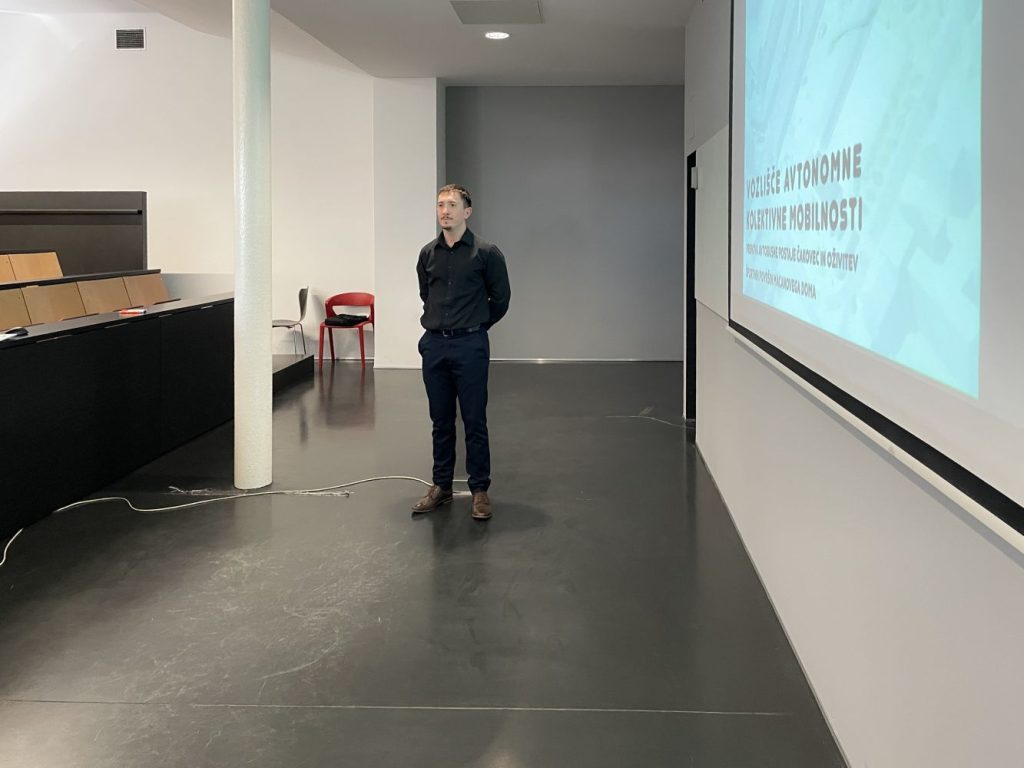
Magistrsko delo obravnava preobrazbo avtobusne postaje v Čakovcu v sodobnejši, funkcionalnejši in prostorsko kakovostnejši javni urbani prostor. Izhodišča dela izhajajo iz problematike obstoječe postajne strukture, ki je prostorsko in funkcionalno zastarela ter nezadostno vključena v urbano tkivo mesta. V teoretičnem smislu se delo opira na koncept ne-krajev, tretjih krajev ter vzorce dejanskega načina uporabe prostora, s posebnim poudarkom na gibanju pešcev in vsakodnevnih urbanih potrebah. Nova idejna zasnova temelji na povezovanju različnih oblik mobilnosti in ustvarjanju prostora, ki ni izključno tranzitnega značaja, temveč omogoča zadrževanje, srečevanje in uporabo v različne namene. S tem avtobusna postaja ni obravnavana zgolj kot prometna infrastruktura, temveč kot del širšega urbanega sistema. Program zajema vsebine, ki podpirajo vsakodnevno bivanje uporabnikov, kot so javni prostor, zelene površine, peš povezave in funkcije, ki prispevajo k aktivaciji lokacije. Magistrsko delo predlaga transformacijo obstoječe avtobusne postaje v nov urbani prostor, ki presega osnovno prometno funkcijo in postane pomembna točka identitete, srečevanja in gibanja v mestu.
»The master’s thesis addresses the transformation of the bus terminal in Čakovec into a more contemporary, functional, and spatially higher-quality public urban space. The starting points of the thesis stem from the issues of the existing terminal structure, which is spatially and functionally outdated and insufficiently integrated into the urban fabric of the city. In theoretical terms, the thesis draws on the concept of non-places, third places, and patterns of actual space usage, with particular emphasis on pedestrian movement and everyday urban needs.The new conceptual design is based on connecting different modes of mobility and creating a space that is not exclusively transit-oriented, but rather enables lingering, encounter, and use for various purposes. In this way, the bus terminal is not treated merely as transport infrastructure, but as part of a broader urban system. The programme encompasses functions that support the everyday presence of users, such as public space, green areas, pedestrian connections, and ancillary functions that contribute to the activation of the site.In conclusion, the thesis proposes the transformation of the existing bus terminal into a new urban space that transcends its basic transport function and becomes an important point of identity, encounter, and movement within the city.«