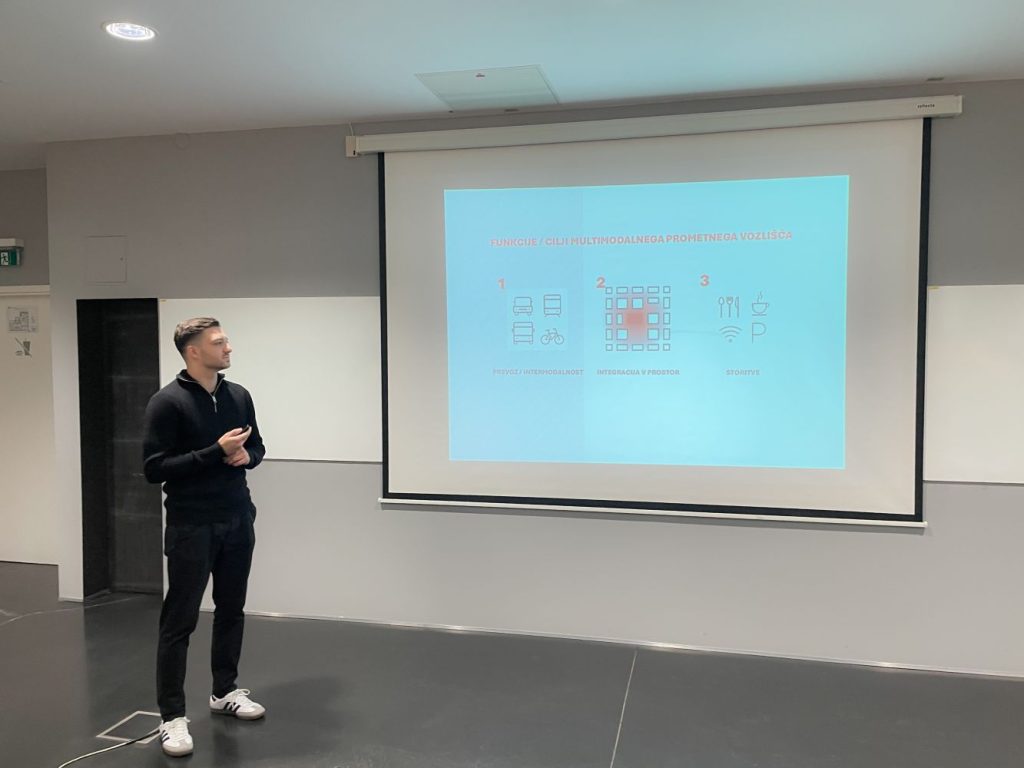
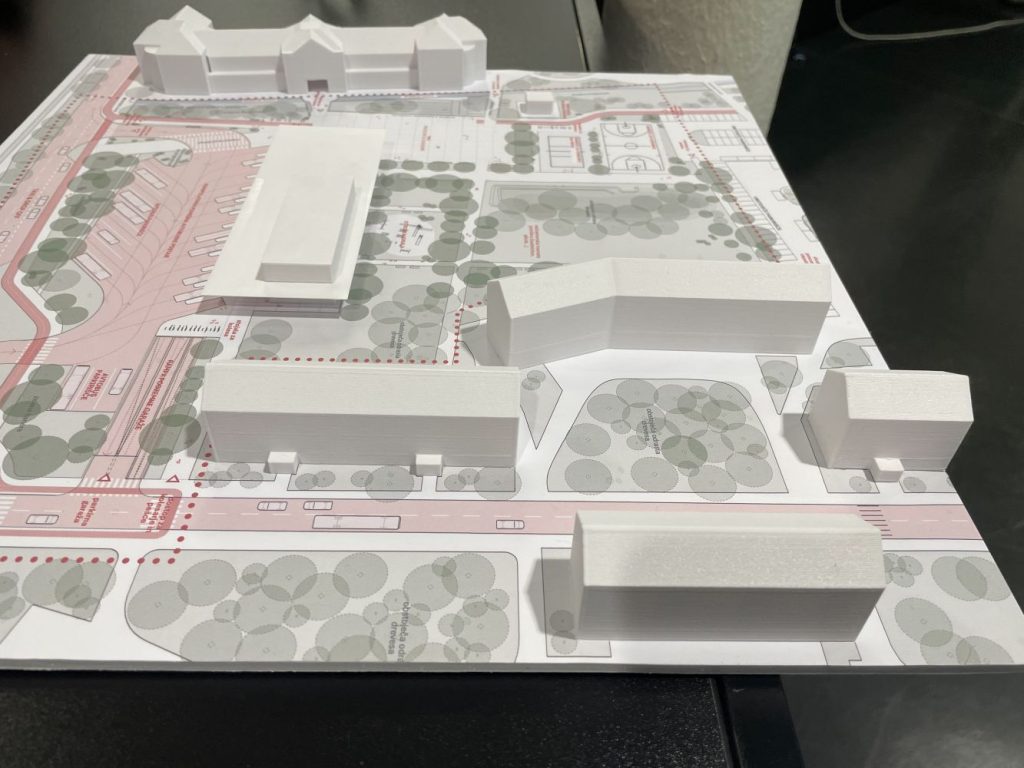
»Magistrsko delo obravnava načrtovanje sodobnega multimodalnega prometnega vozlišča na Ptuju, ki združuje različne koncepte trajnostne mobilnosti.Naloga izhaja iz problematike obstoječe degradirane avtobusne postaje, ki je prostorsko in funkcionalno neustrezna, ter stanja avtobusnega prometa v Sloveniji, ki se sooča z zastarelo infrastrukturo in slabim ugledom. Podana zasnova temelji na povezovanju različnih načinov mobilnosti, kot so avtobus, kolo, hoja, mikromobilnost ter sistema Park & Ride z namenom izboljšanja dostopnosti, zmanjšanja odvisnosti od osebnega avtomobila in spodbujanja bolj trajnostnih oblik mobilnosti. Obenem projekt vključuje tako dodatni program za delo, prosti čas in nakupovanje kot tudi kolesarsko infrastrukturo in parkirno garažo, s čimer se prometno vozlišče integrira v urbano tkivo mesta. S tem avtobusna postaja presega svojo osnovno prometno funkcijo in postane nov urbani prostor, podaljšek mesta in točka dela, druženja in spoznavanja.«
»The master’s thesis addresses the design of a contemporary multimodal transport hub in Ptuj, which combines various concepts of sustainable mobility. The work stems from the issue of the existing degraded bus station, which is spatially and functionally inadequate, as well as from the current state of bus transport in Slovenia, which is facing outdated infrastructure and a poor public image. The proposed design is based on integrating different modes of mobility, such as bus, cycling, walking, micromobility, and the Park & Ride system, with the aim of improving accessibility, reducing dependence on private cars, and promoting more sustainable forms of mobility. At the same time, the project incorporates additional programs for work, leisure, and shopping, as well as cycling infrastructure and a parking garage, which integrates the transport hub into the urban fabric of the city. In this way, the bus station exceeds its basic transport function and becomes a new urban space, an extension of the city, place of work and social interactions.«